Recording choir for Dolby Atmos
I have recently had the amazing opportunity to record a professional choir with an immersive mic array. My friend Nana had invited the Aarhus-based choir “Voce Soleil” in the studio. Recording for immersive formats like Dolby Atmos, which includes height channels, is still relatively new in the field of music recording. Although it is becoming ever more popular, information and experience on mic techniques is still sparse.
Therefore my friend Nana and I had to experiment and improvise a bit to get the sound we wanted.
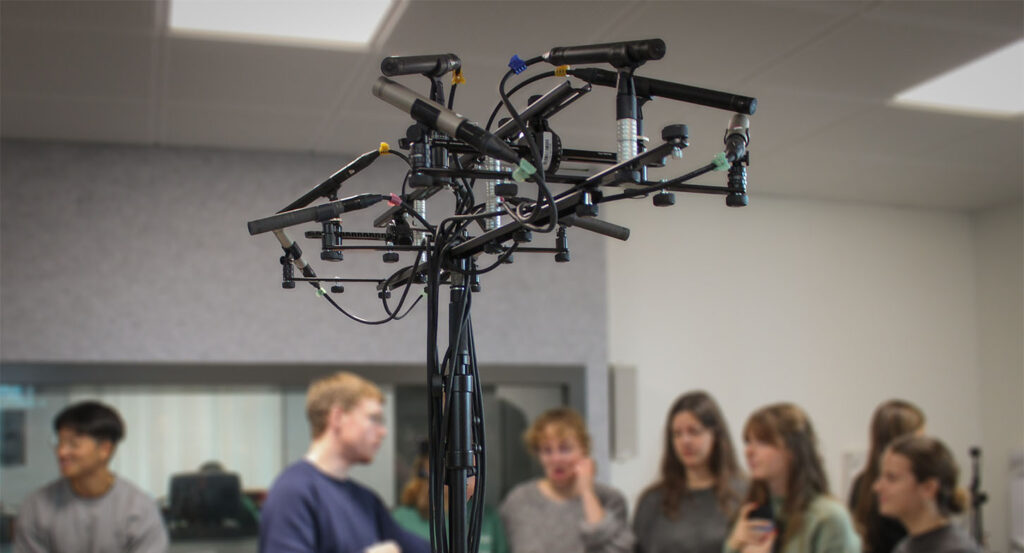
The logical technique to use, seemed to be placing mics in an array equivalent to the 7.1.4 speaker system usually implemented for playback of immersive formats. We omitted the LFE channel, because we didn’t really need a separate mic for low frequencies. Eleven microphones in a mic array is nothing we have ever tried before.
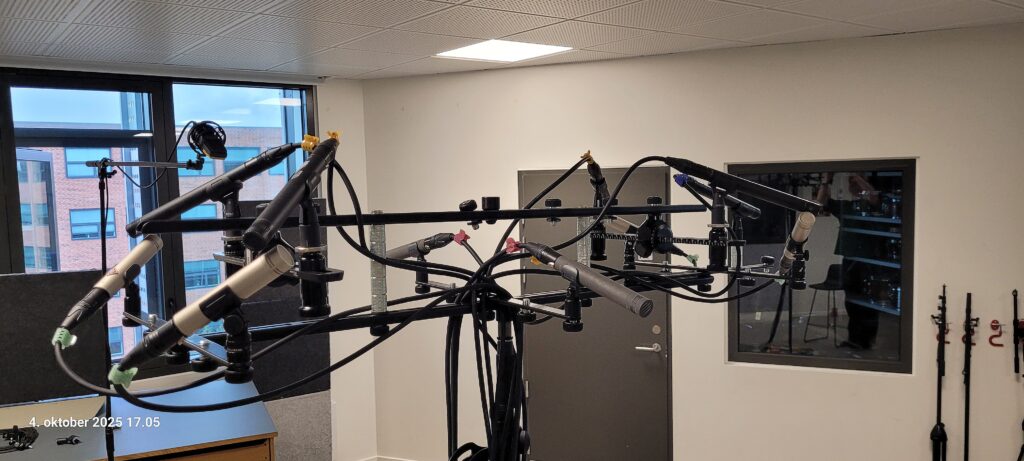
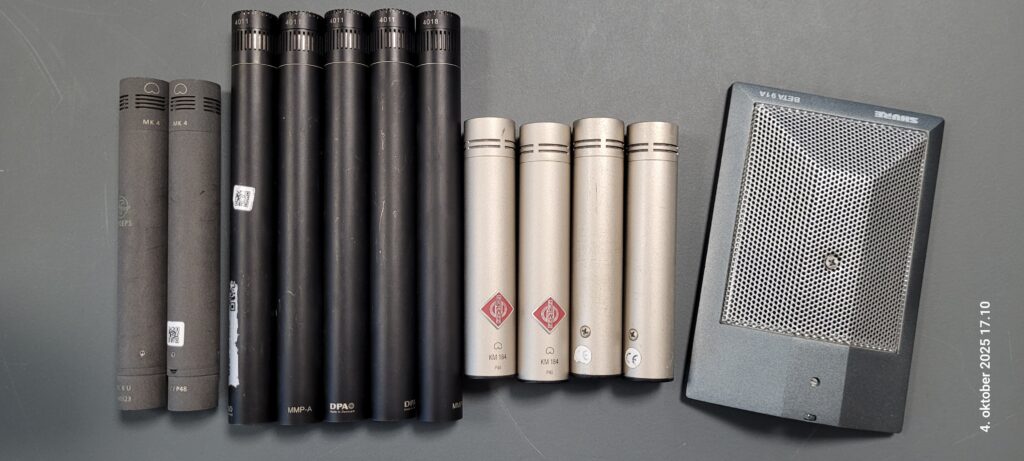
I was concerned about phase coherence and potential comb filtering with all these mics in an array together. So to minimise phase issues and cross-bleed, I arranged all the DPA’s and Neumann’s as coincident pairs with the Neumann KM184 capturing the top channels and the DPA 4011’s capturing the lower channels.

Nana and I as we introduce Atmos to the choir, just before their first listen to the recorded material in the control room.
The mic array didn’t need any adjustments after all. Just listening to the choir entering the live room, we were amazed at the clarity and precise localization of sound sources in the enveloping sound field.
The only real adjustments needed, were in fact the positioning of the singers. It provided greater balance and distribution of the different group’s frequency ranges. Prior to the recording session we made a floor plan for the singers, but this was quickly discarded. After all why struggle with panning and balancing the sound field post-production when you can do it right at the recording stage? I find that this also sounds way more natural without any phase errors.
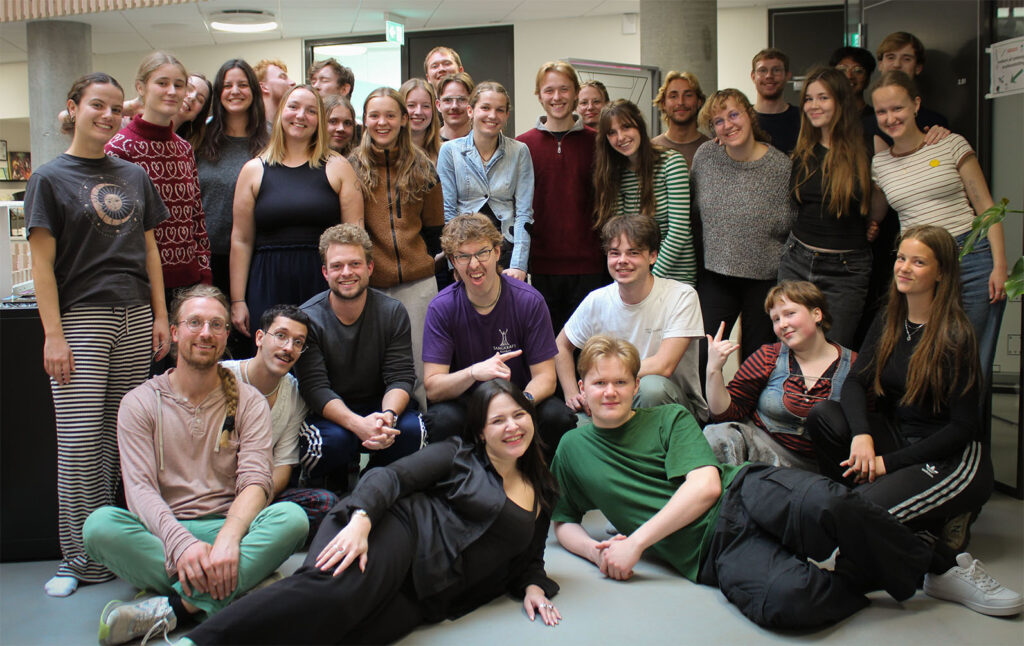
Well how did it sound? As reported back by the many baffled faces within the choir, it was absolutely stunning. A clear sounding choir, enveloping you in a rich musical sound scape. All around you. And it only got better after introducing a little bit of reverb.
Full production of a rock song
For our exam on the advanced studio production course, we were tasked with a full music production from start to finish. The larger part of it had to imply real acoustic recordings rather than computer based sound sources. My study group took it a step further and composed our own song as well. You can have a listen to my edit and mix below.
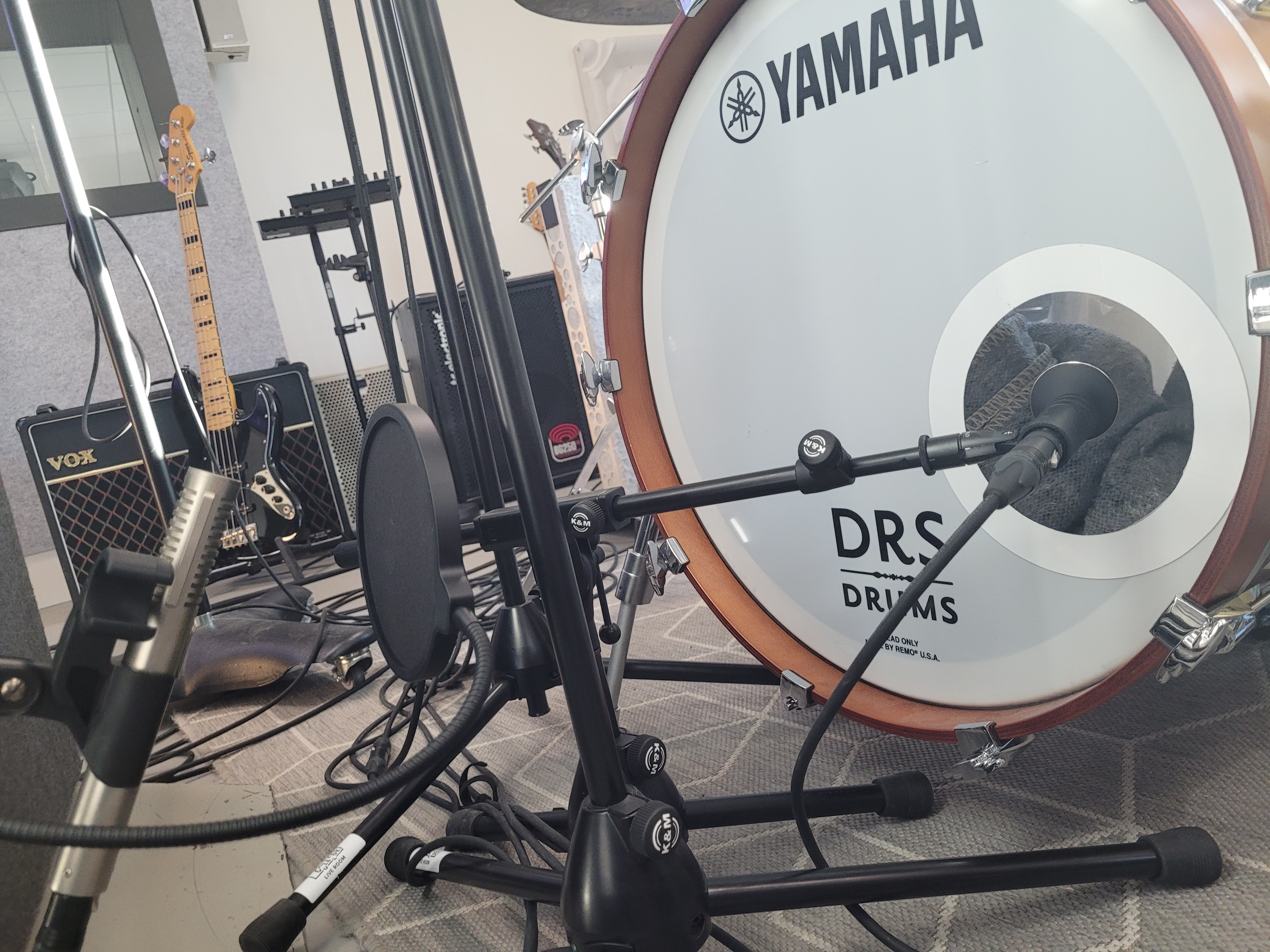
Mic’s on the kick drum: DPA 4055 for transients and clarity, Royer Labs R-122 for “grit” and a little more room. The R-122 is angled and installed with a pop filter to protect the ribbon element and prevent clipping.